Machine Vision
Engineered to
Sub-Pixel Precision
Authorized HikRobot integrator in Israel. We architect and deploy full vision stacks — Sony IMX sensor selection, telecentric optics, structured lighting, and on-board neural inference — integrated directly into your robot controller or PLC.
What Our Vision Systems Actually Do
Each deployment is specified to exact sensor, optics, lighting, and algorithm. No generic "AI-powered" claims — exact camera model, exact tolerance, exact cycle time.

Code Reading & Traceability
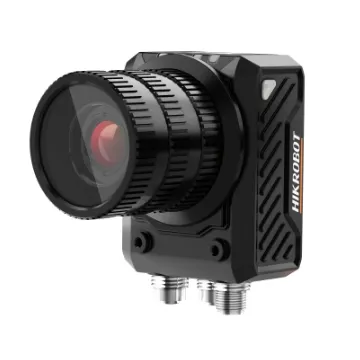
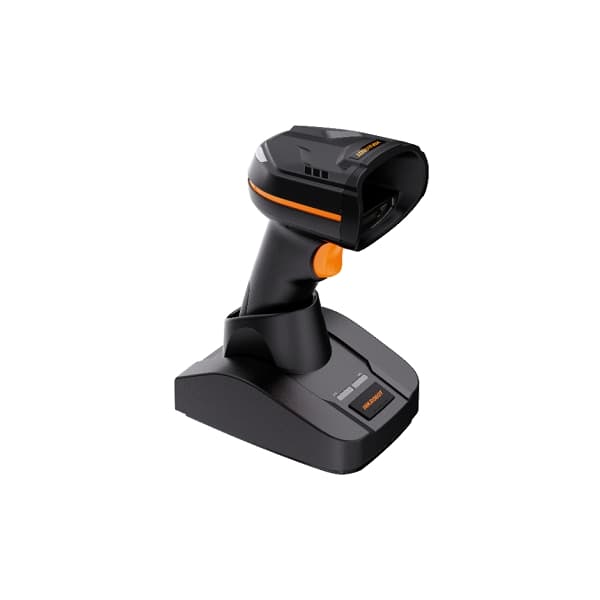
HikRobot ID2000/ID5000 fixed readers and IDH7000 handheld — decode 1D, 2D, QR, DPM at up to 60 reads/sec. Omnidirectional decode, tilt ±45°, contrast threshold auto-adapt. Direct OPC-UA output to MES/WMS.
Pose Estimation & Robot Guidance
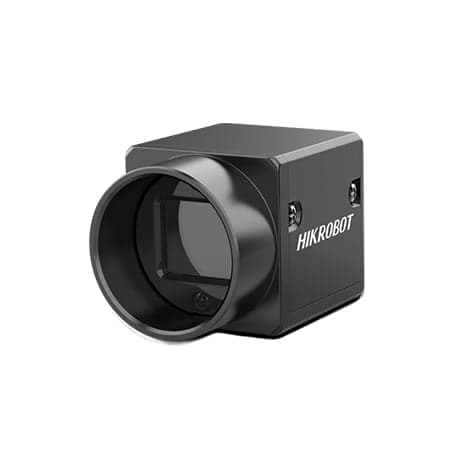
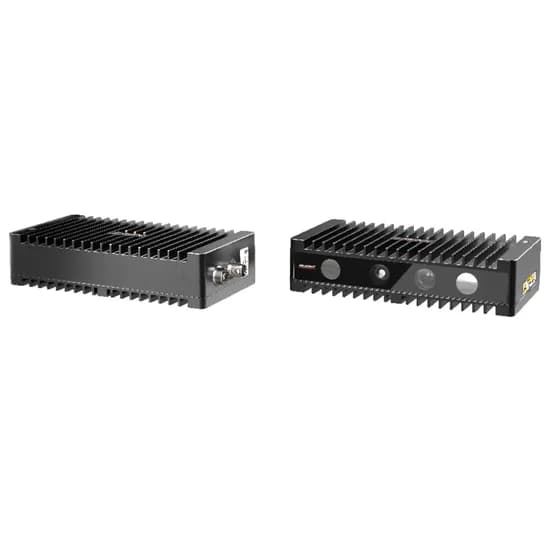
CA series GigE cameras + HikRobot 3D structured-light sensors deliver 6-DoF pose estimation for bin picking, flexible feeding, and visual servoing. Point cloud processing at <100ms. Calibration to robot base frame with sub-mm accuracy.
Inline Inspection & Gauging
CL series line-scan cameras (up to 16K resolution) and CA area-scan with telecentric lenses achieve ±5µm dimensional accuracy. Deep-learning segmentation classifies surface defect types with <0.1% false positive rate.
On-Board Neural Inference
SC6000 AI smart camera runs ResNet/MobileNet classification and anomaly detection on an embedded NVIDIA module — no external vision PC. Trained on synthetic + real datasets. Updates over-the-air. Achieves <0.05% false reject rate in production.
Full Vision Stack. One Integration Partner.
HikRobot — 60M+ cameras deployed globally, GenICam-compliant, HALCON/OpenCV SDK. We handle sensor selection, C-mount / telecentric optics, coaxial & structured lighting, GigE / USB3 cabling, and software integration with your FANUC, ABB, or KUKA controller.
Specified for Your Environment
Camera protection class, lighting wavelength, and lens working distance are specified per application — IP54 for food lines, IP67 for coolant environments, Class 5 cleanroom for pharma.
Want to know if this works on your line?
Get a free, no-obligation feasibility review — or estimate your payback in 2 minutes.
Sensor → Optics → Lighting → Software
Sony IMX CMOS sensors · GigE Vision / USB3 Vision · GenICam compliant · HALCON, OpenCV, and ROS2 SDK. We specify the full optical stack, not just the camera.
Specification-First. No Surprises at Go-Live.
We specify every optical parameter before ordering hardware — sensor size, pixel pitch, working distance, depth of field, lighting angle, and frame rate. This eliminates integration surprises.
Optical Specification
Part geometry, surface finish, contrast targets, cycle time, and reject tolerance → sensor resolution, pixel pitch, lens magnification, lighting wavelength.
System Architecture
Camera model, lens focal length, LED wavelength and angle, controller, I/O map, and software stack specified before any hardware is ordered.
Integration & Calibration
Physical mount, camera-to-robot calibration (hand-eye), vision program, I/O handshake, and HMI. Acceptance test on real parts at your facility.
Validation & SLA
FP/FN measurement report on production samples. 8-hour fault SLA. Remote monitoring. Annual recalibration and model retraining as part of maintenance.
Machine vision — common questions
What is a machine vision inspection system?
A machine vision inspection system uses industrial cameras, lighting and AI software to automatically inspect parts on a production line — checking dimensions, surface defects, presence/absence, codes and assembly correctness at line speed, far faster and more consistently than manual inspection.
What defects can machine vision detect?
Dimensional errors, surface flaws (scratches, dents, contamination), missing or misassembled components, print/label and barcode/OCR verification, colour and texture deviations, and fill-level checks — typically at under 0.05% false-reject rates with the right optics.
How accurate is automated optical inspection?
With the right sensor, lens and lighting, measurement accuracy reaches ±5µm and AI inference runs in under ~16ms. Real accuracy depends on part geometry, contrast and cycle time — we spec the optics to your tolerance before quoting.
Can machine vision integrate with my existing robots and PLC?
Yes. We integrate HikRobot cameras with FANUC and ABB robots (hand-eye calibration) and connect to PLC/HMI/SCADA via standard I/O and fieldbus, so vision guides picking, sorting and reject handling in-line.
How much does a machine vision inspection system cost in Israel?
It depends on resolution, the number of inspection points, line speed and integration scope. Because each system is configured per application, we scope it to your part and tolerance and return a quote and timeline — book a 30-minute feasibility call.
Have a Vision Application? Let's Talk to Your Engineer.
Schedule a 30-minute feasibility call with one of our vision engineers. We assess whether the application is solvable with vision, what accuracy is realistic, and what a deployment would involve — before anyone commits to anything.