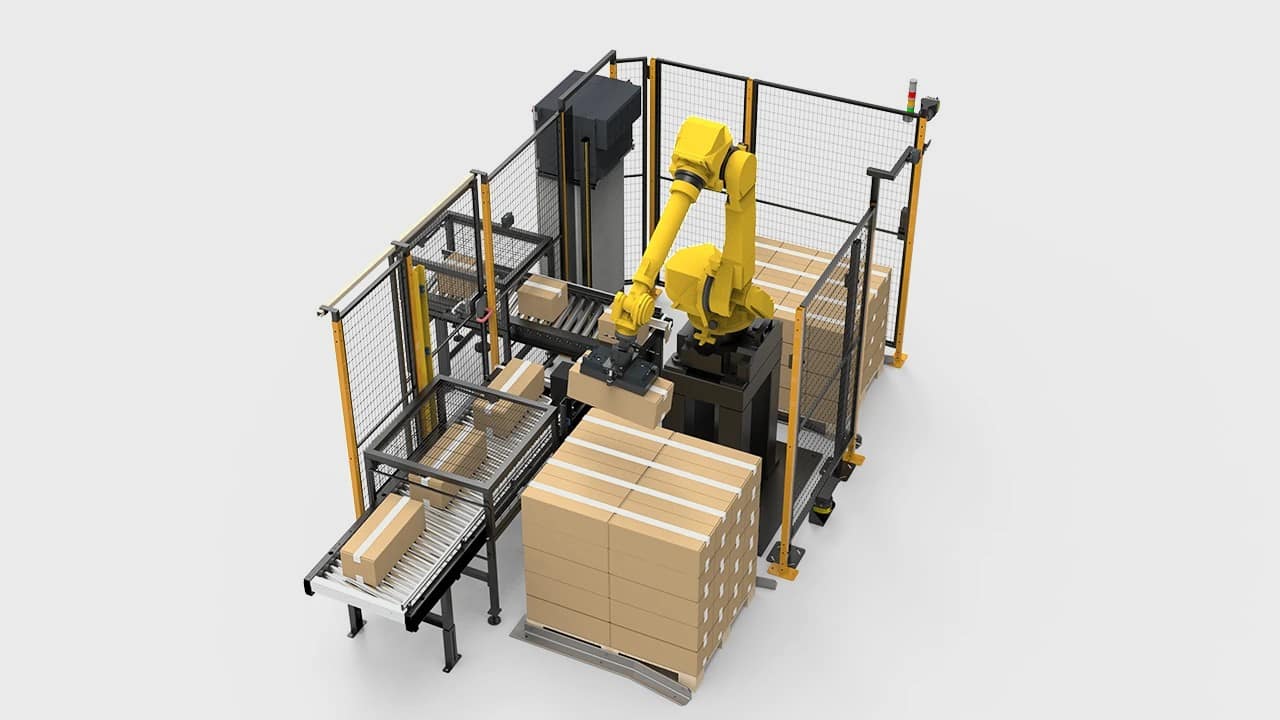
How to design a robotic palletizing cell — layer patterns, reach envelope, gripper selection, cycle time, and conveyor and pallet-dispenser integration.
Palletizing is the most common first automation project in Israeli manufacturing — and one of the easiest to get right with proper planning. A well-designed palletizing cell runs for 15+ years with minimal intervention. A poorly designed one creates constant stoppages. This guide covers the key design decisions.
Step 1: Define the Requirements
Before selecting a robot, establish:
- Product dimensions and weight (min/max if variable)
- Pallet size (EUR 1200×800, US 1200×1000, or custom)
- Layer pattern — brick, column, pinwheel, or custom
- Throughput required (cases/hour or bags/hour)
- Number of SKUs — one pattern or multi-recipe?
- Infeed — conveyor, accumulation table, or manual staging
Step 2: Robot Selection
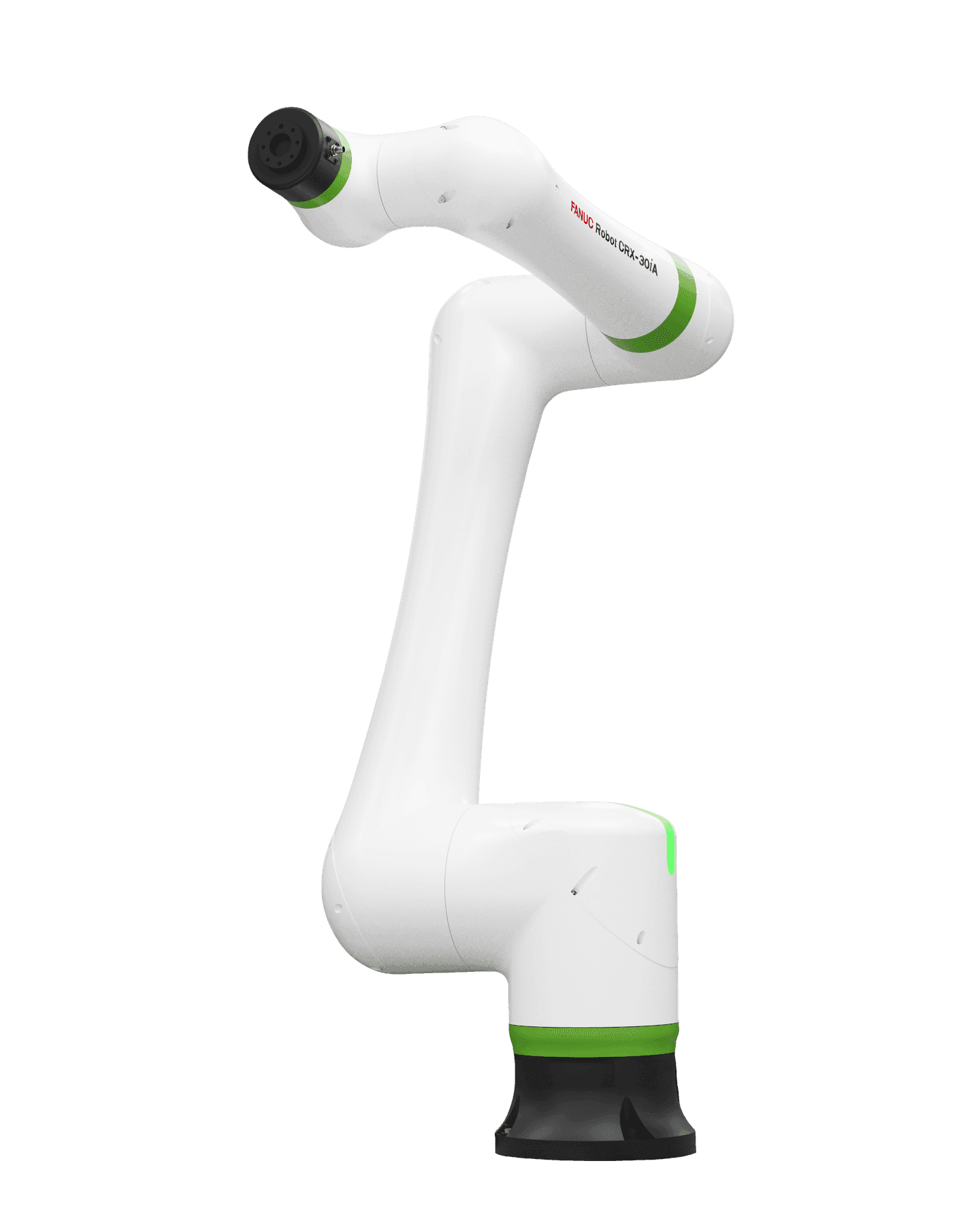
For a standard EUR pallet (1200×800mm) with 25kg bags at 300 bags/hour: the robot needs to reach the pallet corner farthest from the robot base, plus the conveyor infeed. This typically requires 2,500mm+ reach. Robot choices: FANUC R-2000iC/210F, ABB IRB 6700/235, or FANUC M-710iC/50 for lighter products.
Step 3: Gripper Selection
Gripper types by product:
- Bag gripper (clamp-style) — for flexible bags, cement sacks, pet food. Clamps sides of bag
- Vacuum gripper — for cartons, boxes, flat surfaces. Simple and fast, needs clean top surface
- Fork gripper — for bundles, trays, unstable products. Slides under product
- Magnetic — for metal components. Not suitable for food packaging
Step 4: Cycle Time Calculation
Rough cycle time formula: Tcycle = (pick travel + place travel + IO delays) × safety factor. A typical 25kg bag palletizer achieves 6-8 picks/minute (360-480 bags/hour) with a FANUC R-2000iC.
Xpert Robotics has designed and commissioned palletizing cells across Israel — including the Shtivel food production line and Ytong building materials plant. Contact us for a cell design review.