Directive 4.68 (Advanced Manufacturing for Productivity) covers robotics and automation with 20%–30% support. Who qualifies, timeline, and how to apply.
The Israeli Investment Authority (within the Ministry of Economy) has opened a new round of Directive 4.68 — "Advanced Manufacturing for Productivity." For any Israeli factory planning an automation or robotics project, this is one of the strongest opportunities available: the state co-funds 20% to 30% of an approved investment program. Robotics is explicitly named among the supported technologies. This guide explains who may qualify, which projects fit, the exact timeline, and how to prepare an automation project that is ready to submit.
Not sure what the robotic part of your project should look like? Our industrial robots guide explains the robot types and what drives the cost of a cell.
What was announced for 2026?
The current round was published on 7 July 2026 and is open to factories nationwide. This article focuses on Track 1 (the productivity track). Here are the key facts, straight from the official call:
Quick view — Track 1 (Productivity):
- Directive: 4.68 — Advanced Manufacturing for Productivity
- Published: 07.07.2026
- Clarification questions: until 19.07.2026 at 15:00 to lpii@economy.gov.il; answers published 29.07.2026
- Applications open: 06.08.2026 at 10:00
- Final submission deadline: 02.09.2026 at 13:00
- Allocation method this year: first-come, first-served
- Support rate: 20% nationwide, up to 30% in priority areas and defined sectors
- Robotics is explicitly listed among the supported advanced-manufacturing technologies
- Deciding body: the Investment Authority for Industry and Economy Development
Last checked: 13.07.2026. The grant dates, rates and conditions are set by the Investment Authority and may change. Verify every detail against the official directive on the Ministry of Economy website before applying — the final eligibility decision rests solely with the Investment Authority.
The key point: the Authority explicitly lists advanced robotics alongside industrial IoT, data analytics, machine vision and production-floor digitalization. That means a palletizing, machine-tending or vision-based quality project can sit squarely within the technologies the round is meant to encourage — subject to conditions and approval.
Which factories may qualify?
Eligibility is defined in the directive itself, and not every company or every robot purchase qualifies. These are the main Track 1 conditions as they appear in the official call:
Main eligibility criteria:
- Manufacturing activity meets the "plant" definition in Directive 4.68
- The activity is not eligible under the Encouragement of Capital Investment Law, 1959
- At least 5 years of experience in one of the industry branches defined in the directive
- Employment of 5–250 workers in the relevant activity
- Plant revenue in Israel up to ₪200 million (prior year, or 3-year average)
- Financial-risk rating of 1–8; no restricted bank account and not in receivership or liquidation
- The plant or production line is not currently, and was not previously, government-supported
- Application fee of ₪1,500 (non-refundable even if the application is rejected)
On the support rate: factories nationwide that do not meet the enhanced definitions receive 20% of the approved investment program. An enhanced rate of up to 30% applies to factories in the following sectors and areas:
Eligibility for the enhanced rate (up to 30%):
- Arab-society businesses meeting the minority-settlement conditions (Government Decision 1371)
- Northern-region plants under Government Decisions 3265 and 4238
- Western Negev (Decision 3303) and Eastern Negev — Arad, Dimona, Mitzpe Ramon and Yeruham (Decision 1416)
- Druze and Circassian communities in the Galilee, Carmel and Golan Heights (Decisions 2856 and 2857)
- Ashkelon (Decision 3304) and the Tekuma-region communities
- National-priority areas and Jerusalem
Note: Track 1 runs this year on a first-come, first-served basis — so early technical readiness is a real advantage, not just a recommendation. A factory that arrives with feasibility and a quotation ready near the 06.08.2026 opening is in a stronger position.
Which robotics projects are relevant?
These are the project types that map directly to the technologies the round encourages — and to our own areas of expertise:
Typical applications:
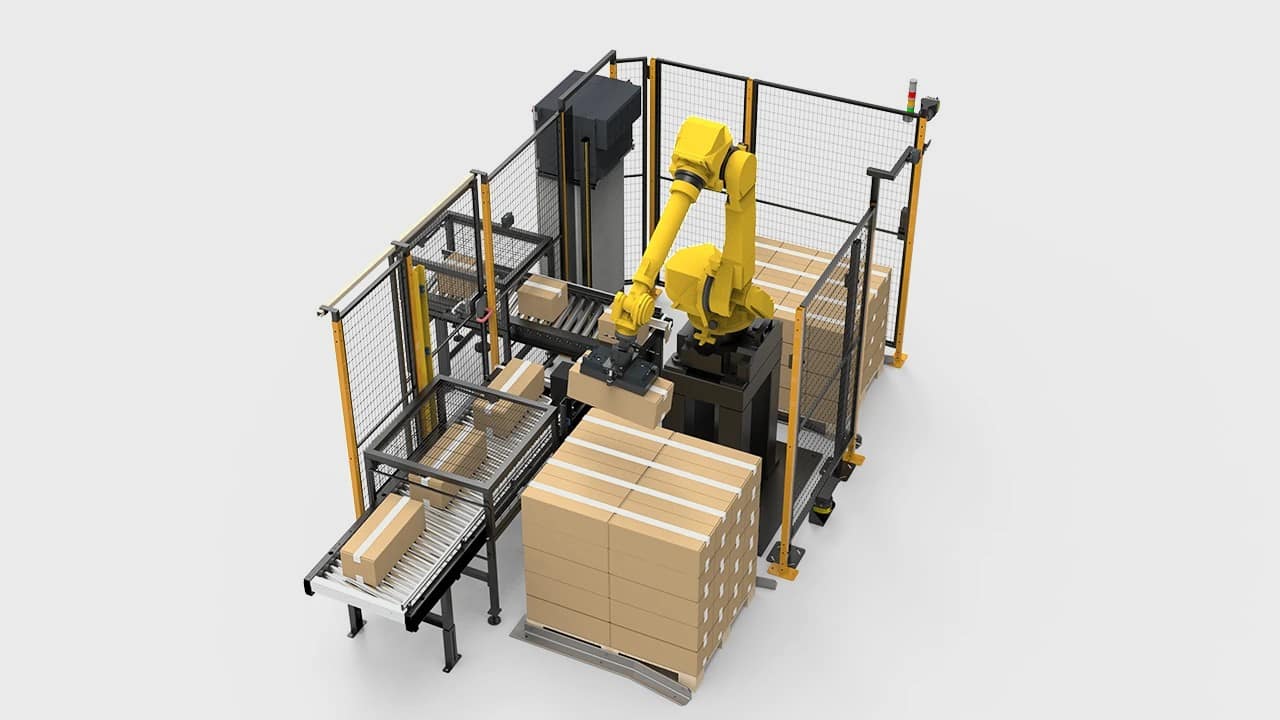
- Robotic palletizing and end-of-line packaging
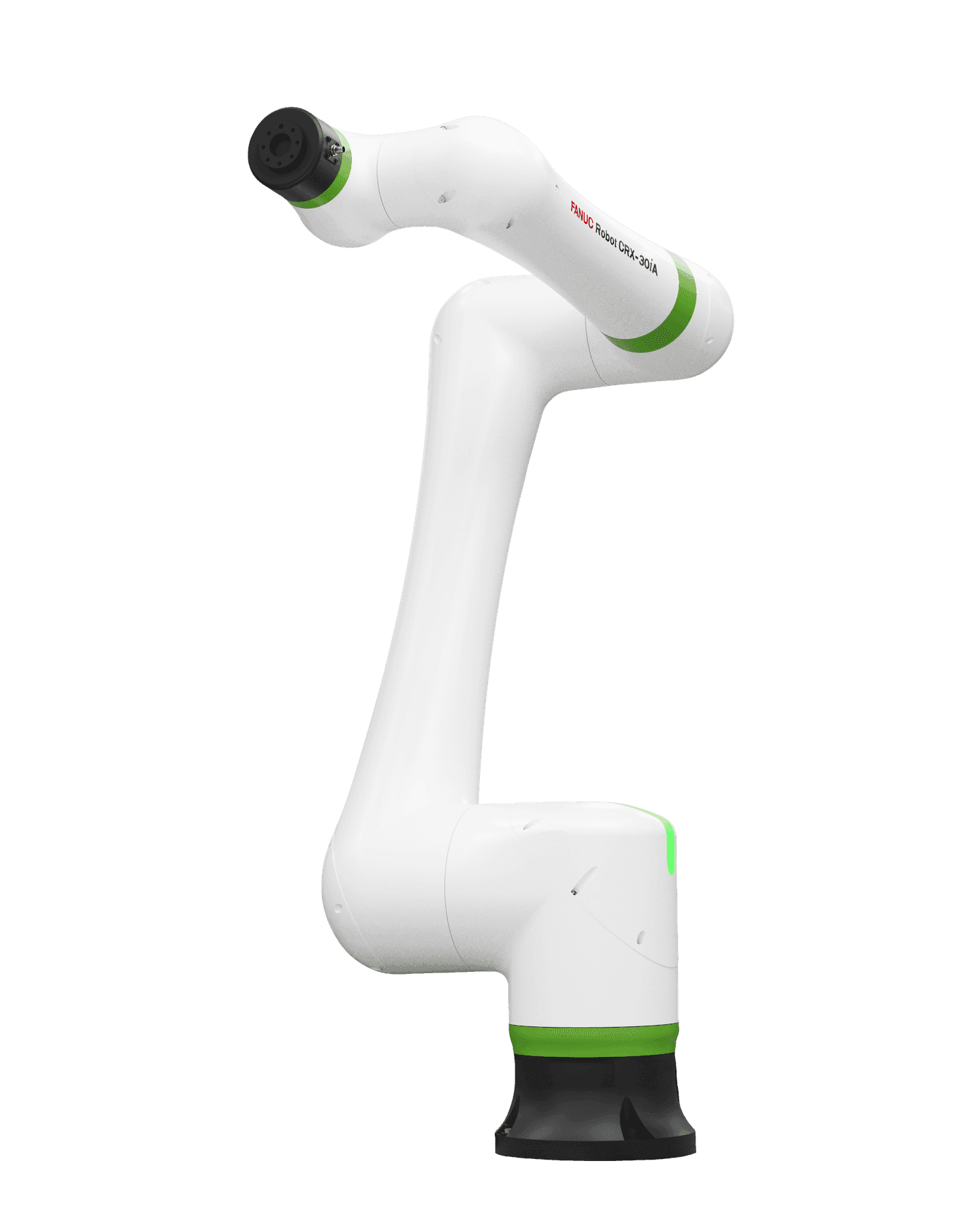
- Cobot palletizing for lower- to mid-volume lines
- Machine tending — CNC, injection molding and machining centers
- Machine vision for quality control and defect detection
- Robot-guided picking and handling
- Production-floor data collection and monitoring (Industry 4.0)
- Integration of robots, PLCs, vision, conveyors and safety equipment
An important caveat: the eligibility of each component — tooling, safety equipment, software, integration, conveyors and installation — is determined under the directive. Do not assume the entire turnkey cell is automatically reimbursable; the exact makeup of the approved investment is assessed by the Authority.
What does a complete automation budget include?
The productivity plan must include two mandatory components: (1) investment in advanced technological equipment for the supply chain that improves operational metrics, and (2) an operational-excellence improvement that actually raises labor productivity. This is where engineering expertise matters — a real project budget is far more than the price of the robot:
Typical budget line items:
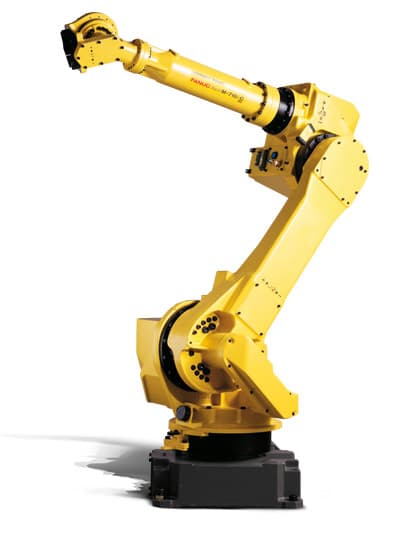
- Industrial robot or cobot
- Gripper / end-of-arm tooling (EOAT)
- Machine-vision system
- Safety scanners, guarding and risk assessment
- PLC, HMI and electrical panel
- Conveyors and product presentation
- Mechanical and electrical engineering
- Programming and simulation
- Factory and site acceptance testing (FAT/SAT)
- On-site installation and commissioning
- Operator and maintenance training
- Spare parts and ongoing support
Our turnkey integration service already covers robot selection, layout, cycle-time simulation, mechanical and electrical design, PLC/HMI programming, FAT/SAT, commissioning, training and support — exactly the framework from which a submission-ready project budget is built.
A simple financial example
Suppose a factory is considering a robotic cell costing ₪500,000 (a hypothetical example for illustration only):
How the grant affects the investment:
- Example robotic-cell cost: ₪500,000
- At 20% support: a ₪100,000 grant, with ₪400,000 remaining cost
- At 30% support: a ₪150,000 grant, with ₪350,000 remaining cost
The grant shortens the payback period, but the full picture depends on your line data: current labor cost and number of shifts, overtime and temporary-worker expenses, production increase, scrap reduction, downtime, maintenance and the expected useful life of the system.
Want an exact number for your line? The Xpert Robotics ROI calculator computes payback from rate, product, shifts and labor costs — a result in 2 minutes.
What should a factory prepare before requesting a quote?
The more precise the information, the more accurate the feasibility and budget — and the faster they are to prepare, which is critical in a first-come, first-served round. This is the preparation checklist:
Preparation checklist — 12 items:
- Product dimensions and weight
- Current and target throughput per hour
- Number of shifts and operating hours
- Number of operators in the process
- Current cycle time
- SKU variety and changeover frequency
- Photos or video of the line
- Available floor space
- Required palletizing or packaging patterns
- Existing PLC, conveyor and safety equipment
- Current scrap, quality or ergonomic problem
- Desired installation date
Common application and planning mistakes
What to avoid:
- Requesting a robot price without defining the complete cell
- Relying on labor savings alone while ignoring throughput and quality
- Failing to establish a baseline productivity measurement before the project
- Selecting a robot before validating cycle time and reach
- Leaving safety, CE documentation or integration out of the budget
- Waiting until the application window is nearly over to complete technical feasibility
- Treating a preliminary quotation as a production-ready engineering scope
How Xpert Robotics supports the technical side
To be clear about the boundary: Xpert Robotics provides the engineering and commercial project scope — not legal advice or grant-application advice. What we provide:
Our engineering support:
- On-site process review
- Automation feasibility assessment
- Robot and gripper selection
- Preliminary layout
- Cycle-time calculation and simulation
- Budgetary quotation
- ROI model
- Implementation schedule
- Turnkey engineering, integration and commissioning
Our case studies — including the Shtivel palletizing project and the Ytong line — illustrate the kind of measurable, technically defined automation a factory should prepare, without implying that either project received this particular grant.
On the submission itself: applications are made by completing the Investment Authority online details form; credentials for the "Kalkalit" submission system are then emailed to you. Technical support for submission: 03-9778065. You may apply for a single plant or a production line, and no more than two production lines per plant (each with separate, independent bookkeeping).
Track 2 in brief
Alongside the productivity track (Track 1) that this article focuses on, Directive 4.68 also includes Track 2 — implementation of advanced-manufacturing technologies — aimed at plants seeking to adopt advanced technology with a more moderate productivity-improvement requirement. Both tracks close for submission on 02.09.2026. If you are unsure which track fits, review the official directive or contact us for a suitability check.
Planning to apply? Here is how to start
Planning to apply for the advanced-manufacturing grant? Send us the product type, weight, throughput per hour and a photo of the line — our engineering team will assess feasibility and prepare a preliminary technical and budgetary scope for your robotics project. We do not promise grant approval; we provide a technical feasibility review and a preliminary project budget.