Cardboard, kraft paper, bags and open-cell foam leak air, so deeper vacuum is the wrong lever. Fix it with sealed area and flow — with real VMECA numbers.
The gripper holds a box perfectly on the bench. Put it on the line and it drops one carton in thirty — usually at speed, usually on the last box of a layer. The instinct is to turn the vacuum up. On a porous workpiece that instinct is wrong, and understanding why takes about five minutes and saves a week of tuning.
What "porous" Means to a Vacuum System
A suction cup does not stick to anything. It removes air from a sealed volume so that ambient atmospheric pressure — about 100 kPa at sea level — presses the workpiece against the cup. The available holding force is roughly the pressure difference multiplied by the effective sealed area. Nothing about that requires the workpiece to be airtight, but everything about it requires the system to keep maintaining that difference.
Corrugated cardboard is not a solid sheet. It is a mat of cellulose fibres with continuous air paths through the flutes and out of the cut edges. Kraft paper, MDF, plaster, brick, open-cell foam and loose-weave textiles behave the same way. The moment you evacuate the cup, air starts moving through the workpiece itself to replace what you removed. That is a leak, and it never stops for as long as you hold the part.
Two different problems that feel identical on the line:
- A sealed workpiece that seals badly — a glass sheet with dust under the lip, or a warped panel. Here the cup geometry is at fault, and better lip compliance or a bellows cup fixes it.
- A porous workpiece that cannot seal at all — cardboard, paper, foam. No cup geometry fixes this, because the leak path runs through the material rather than past the lip.
Diagnose which one you have before changing anything. Hold the part stationary at full vacuum and watch the gauge. A sealing problem usually settles at a stable level; a porous part sits at a lower level indefinitely and the pump never stops working. If the pump is audibly running continuously while holding, you have a leak, not a seal.
Why More Vacuum Makes It Worse
Vacuum systems are described by two independent quantities, and confusing them is the root of most porous-handling failures. Vacuum level (kPa) is how deep the pressure difference is. Flow (Nl/min) is how much air the generator can move per unit time. A leak is a volumetric loss, so it is answered with flow. Turning up the target vacuum level does not add flow — it just sets a goal the generator cannot reach while the workpiece keeps bleeding air.
What you actually get is worse than no improvement. The generator runs continuously trying to reach a setpoint it can never hit, evacuation time stretches, the vacuum switch either never trips or trips late, and the robot moves before a usable holding force exists. That is why the failure shows up at speed and not on the bench: on the bench you waited.
The three levers that do work, in the order worth trying them:
- Increase the effective sealed area. A closed-cell foam pad seals against a fibrous surface instead of fighting it, and it spreads the load over far more area than a rubber lip. This is usually the single biggest win on cardboard.
- Increase flow. Size the generator to supply the measured leak and a working reserve on top, rather than to hit a headline vacuum figure. A multi-stage ejector moves considerably more air per unit of compressed air consumed than a single-stage one.
- Improve lip compliance last. Bellows and multi-fold cups matter for thickness variation and tilt, but on a genuinely porous part they are a refinement, not the fix.
The Trade-Off, in Real Numbers
This is not a theoretical argument. It is visible in the specifications of any serious vacuum catalogue, because manufacturers deliberately trade depth against volume. Below are five units from the VMECA range we supply, with the figures taken from VMECA's own specification tables. Compare the GM-series V-Grip with the M3134 — the gripper built for porous material accepts the lowest vacuum level in the table in exchange for more flow than the pump that reaches the deepest vacuum.
| Product | Vacuum level | Open vacuum flow | Built for |
|---|---|---|---|
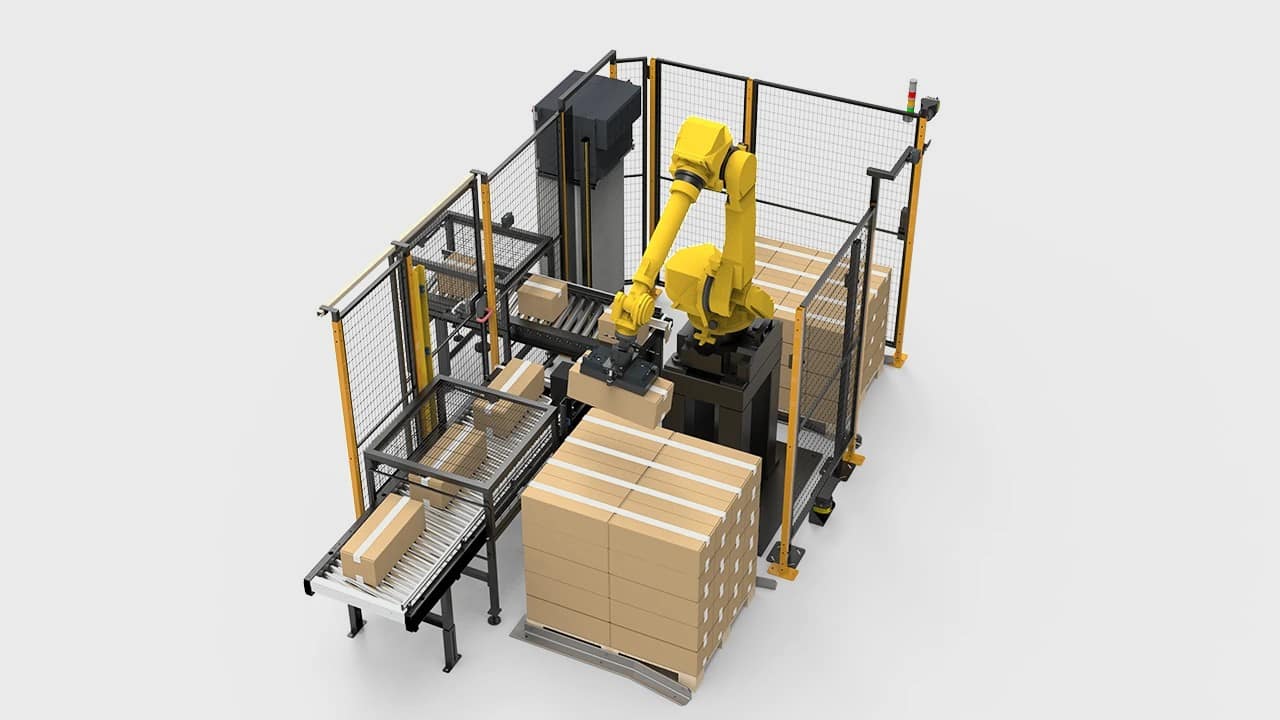
| GM130 Beam Vacuum Gripper | -75 kPa | 2,896 Nl/min | A full row of cartons in one pass, foam-pad sealing face |
| GM130X600 Foam-Pad V-Grip | -75 kPa | 2,896 Nl/min | Full porous sheets — 130 × 600 mm foam pad |
| ML1200 Mega Vacuum Pump | -92 kPa | 14,460 Nl/min | Large panels with a high leak reserve |
| M3134 Magic Pump | -92 kPa | 1,364 Nl/min | Deep vacuum on sealed workpieces |
| VTM10 Mini Vacuum Pump | -85 kPa | 74 Nl/min | Fast on/off cycles, small sealed parts |
The GM130 Beam Vacuum Gripper gives up 17 kPa of depth relative to the M3134 Magic Pump and returns 2.1 times the flow at the top of its range. That is the design argument for porous handling expressed as a spec line: on a leaking workpiece, volume beats depth. Note that the highest-flow unit in the table is not the porous specialist — flow alone is not the answer either. The V-Grip pairs its flow with a foam sealing face, which is what makes the flow useful. Note also what the table does not carry: VMECA publishes holding force for these grippers in newtons at a stated pad coverage, not as a kilogram payload, because the achievable load depends on your workpiece and your sealing area rather than on the gripper alone.
Which Tool for Which Workpiece
Once you stop treating porosity as a vacuum-level problem, selection becomes straightforward. Match the sealing face to the surface, then size the generator for the leak.
| Workpiece | Reach for | Why it works |
|---|---|---|
| Corrugated cartons | GM130 V-Grip, or Magic Cup MF | Multi-fold bellows absorb carton thickness variation; a foam-pad V-Grip covers a whole row in one pass |
| Kraft paper, uncoated board | FF mark-free cups | A wide soft lip spreads the load and leaves no witness mark on uncoated stock |
| Plywood, MDF, full porous sheets | GM130X600 foam-pad V-Grip | A 130 × 600 mm foam pad seals across the whole sheet and tolerates surface variation |
| Open-cell foam, brick, block | Mechanical or needle gripping | Genuinely open-cell material leaks faster than any economically sized generator can supply |
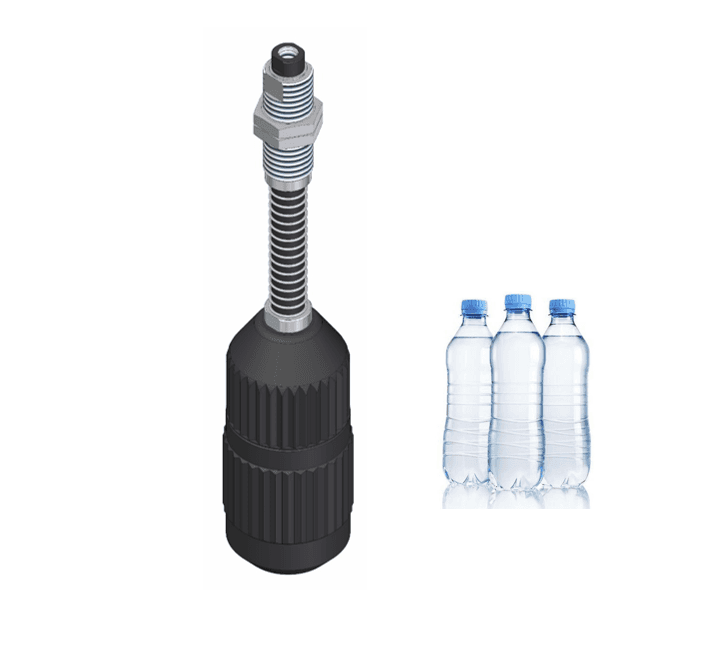
| Thin bags, shrink film | Magic Cup X, or VBX double-bellows cups | Deep compliant bellows seal weak film without tearing it |
| Dusty porous material | FCF flat-curved cups with an inline vacuum filter | A filter upstream of the ejector keeps fibre and dust out of the nozzle |
Foam is a wear item, not a fixture. A foam sealing face on an abrasive product like brick or raw board degrades, and holding force falls off gradually rather than failing outright — which makes it easy to misdiagnose as a pump problem months later. Put foam-face inspection on the same schedule as cup replacement, and prefer designs with a replaceable or field-cuttable foam strip.
Sizing for a Leak Instead of a Seal
On a sealed part you size for evacuation time. On a porous part evacuation never completes, so the number that matters is the steady-state flow needed to hold the pressure difference you actually require — which is usually far less than the deepest vacuum the pump can reach.
A practical sequence:
- Decide the holding force you need, including a safety factor for acceleration and for the part being gripped off-centre. Vertical lifting and horizontal shear are different cases; the shear case is normally the limiting one.
- Work back to the pressure difference you need over the sealed area you can actually achieve — the foam pad footprint, not the outline of the gripper.
- Measure, do not guess, the leak. Hold a representative part and read the flow the generator settles at. Cardboard varies enormously between suppliers, and between a dry pallet and one that has sat in humidity.
- Size the generator for that measured flow plus reserve, and check the compressed-air supply can actually feed it. A high-flow ejector starved of air delivers neither flow nor vacuum.
- Zone the gripper with check valves so an uncovered cup does not dump the whole manifold. This is what makes mixed-SKU and partial-layer picking viable at all.
That last point is worth emphasising. On a partially covered beam gripper, the cups hanging over the edge of a short box are an open leak in parallel with your workpiece. Zoning or individually valved cups turn that from a failure into a non-event, and it is frequently the real fix when a cell handles several box sizes.
When Vacuum Is the Wrong Tool Entirely
Some materials are not worth solving with vacuum. Open-cell foam blocks, loose-weave textiles and dry carbon-fibre fabric have leak paths so large that any economically sized generator loses. For these, a needle gripper that mechanically penetrates the material is the correct answer, and it uses a fraction of the air. Perforated or laser-cut sheet metal with apertures under the cups is the other classic case — there a magnetic gripper sidesteps the problem completely.
Recognising this early matters commercially as well as technically. We have seen cells specified with progressively larger pumps to brute-force a material that a different gripping principle handles cleanly at lower cost and lower air consumption.
Getting It Right the First Time
If a line is dropping product now, the fastest diagnostic is the one above: hold a part, watch the gauge, and establish whether you are looking at a seal problem or a leak. If it is a leak, stop adjusting the vacuum setpoint and start with the sealing face.
If you are specifying a new cell, bring a real sample of the worst-case workpiece — the flimsiest board, the dustiest brick, the most crinkled film. We are the Israeli partner for VMECA and can test against the actual product rather than a datasheet assumption, then size the gripper and generator around what we measure. Talk to our engineering team and send the sample.
All product figures above are from the VMECA catalogue as published on our own product pages and are subject to change by the manufacturer. Vacuum performance is strongly affected by altitude, compressed-air supply pressure, hose diameter and length, and workpiece condition — always validate against your actual parts before committing a design.